
Prerequisites
Before you begin, make sure you have:- A deployed chatbot in VectorShift (toggle Deployment Enabled in the Export tab).
- A Twilio account. You can use Twilio’s free sandbox for testing. Production use requires an approved WhatsApp Business Profile.
- Your VectorShift API key (found under your profile > API Keys).
Step 1. Set up your Twilio account
Step 1.1. Create a Twilio account
Navigate to twilio.com and sign up for an account. You will start in a sandbox environment, which is enough for testing.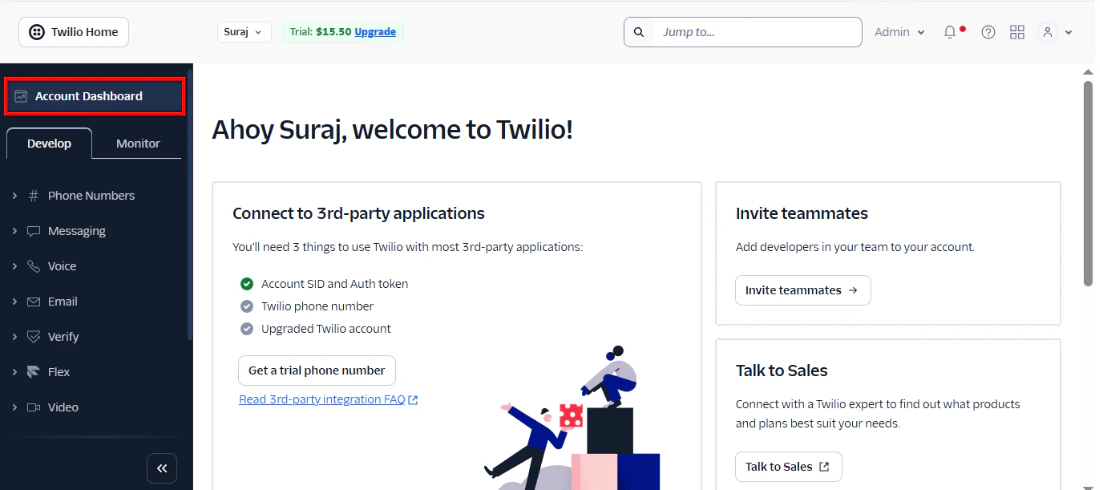
Step 1.2. Create an API key
Go to the Manage account page and navigate to the API Keys section. Click Create API Key.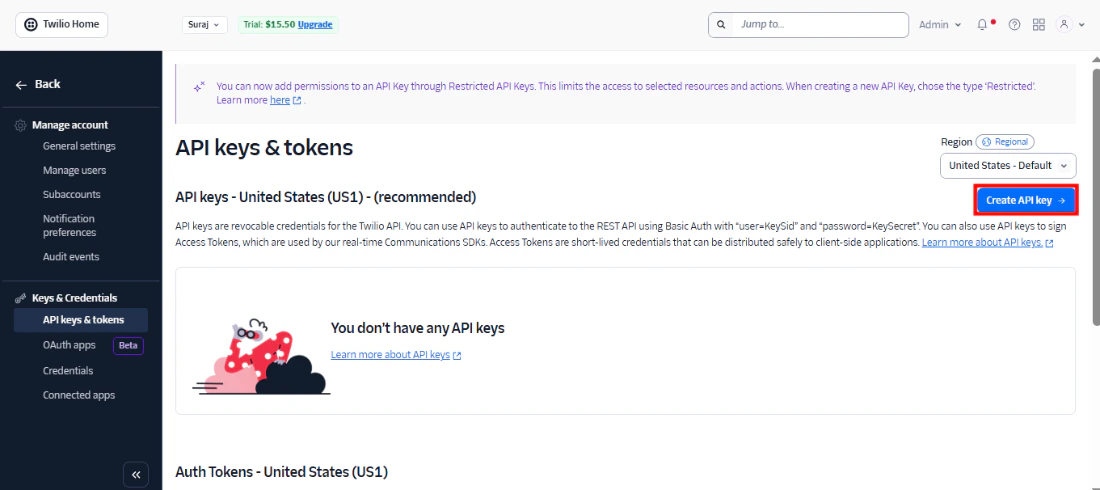
Step 1.3. Configure the API key
Give your key a name (for example, “VectorShift Chatbot”) and select a region. You can leave the key type set to Standard.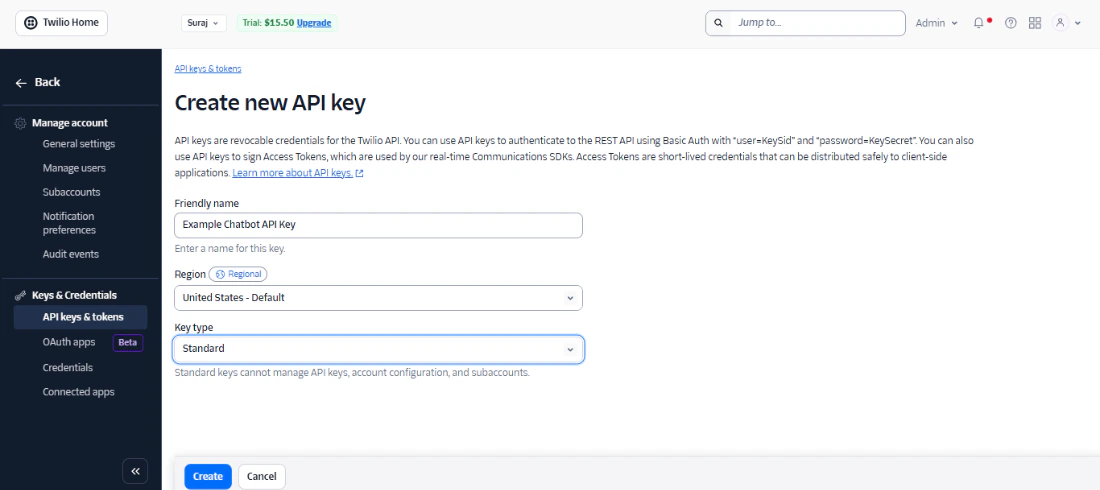
Step 2. Connect Twilio to VectorShift
Open the chatbot builder in VectorShift, go to the Export tab, and navigate to the WhatsApp / SMS sub-tab. You will see fields for your Twilio Account SID and Auth Token, along with a Twilio Webhook URL that VectorShift has generated for this chatbot. Copy your Account SID and Auth Token from Twilio and paste them into the corresponding fields.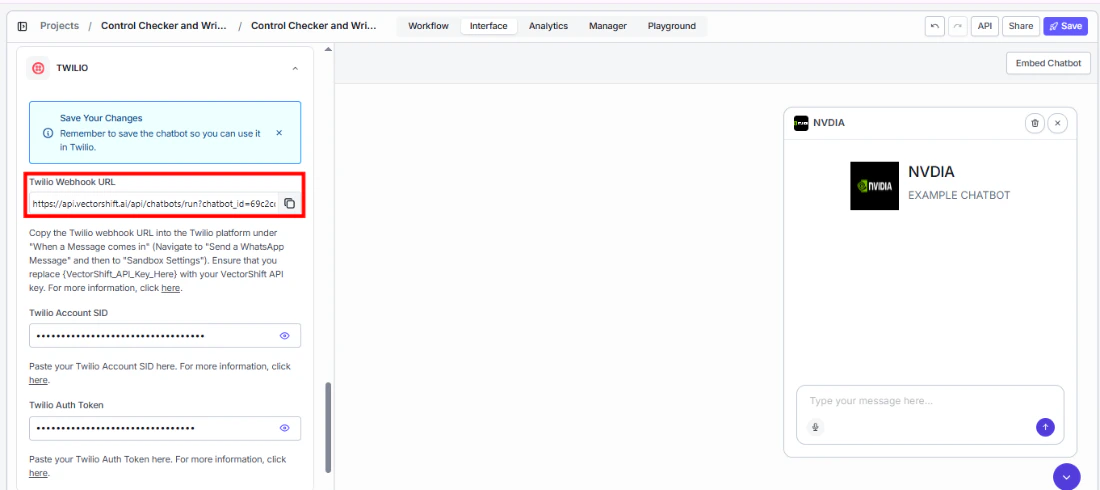
Step 3. Copy the webhook URL
Copy the Twilio Webhook URL from the VectorShift Export tab. You will paste this into the Twilio console in the next step.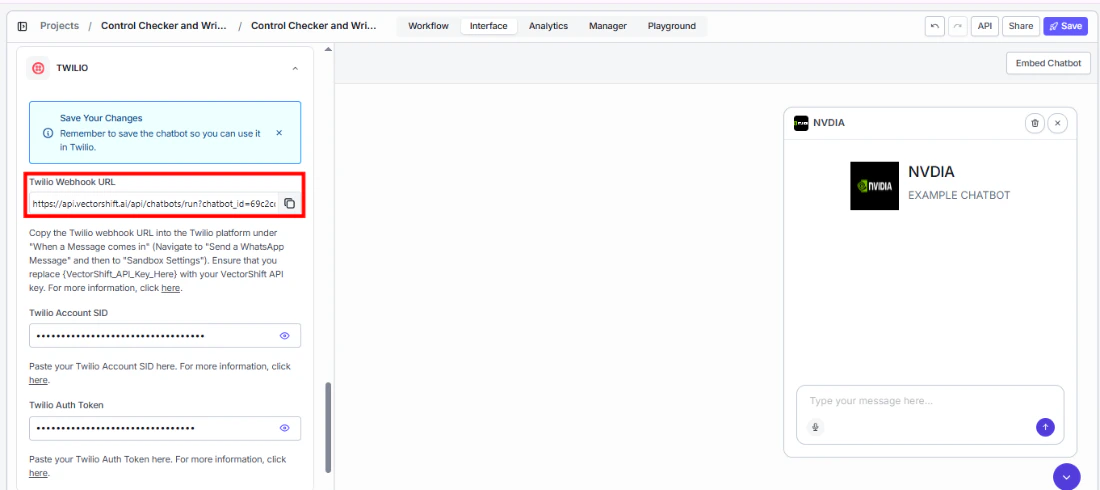
Step 4. Configure the Twilio sandbox
Step 4.1. Paste the webhook URL
In the Twilio console, navigate to the WhatsApp Sandbox settings. Paste the webhook URL into the “When a message comes in” field. Leave the “Status callback” field empty.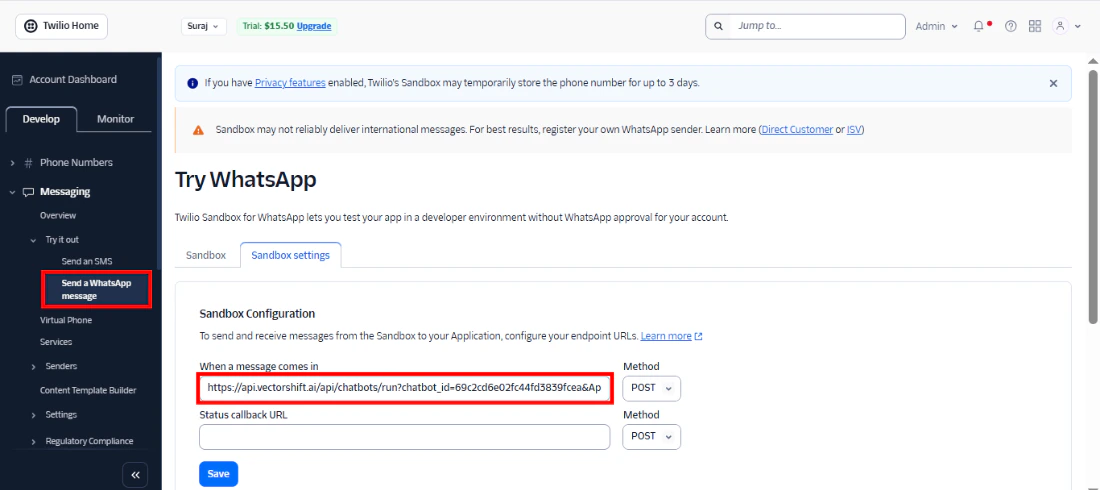
Step 4.2. Append your VectorShift API key to the URL
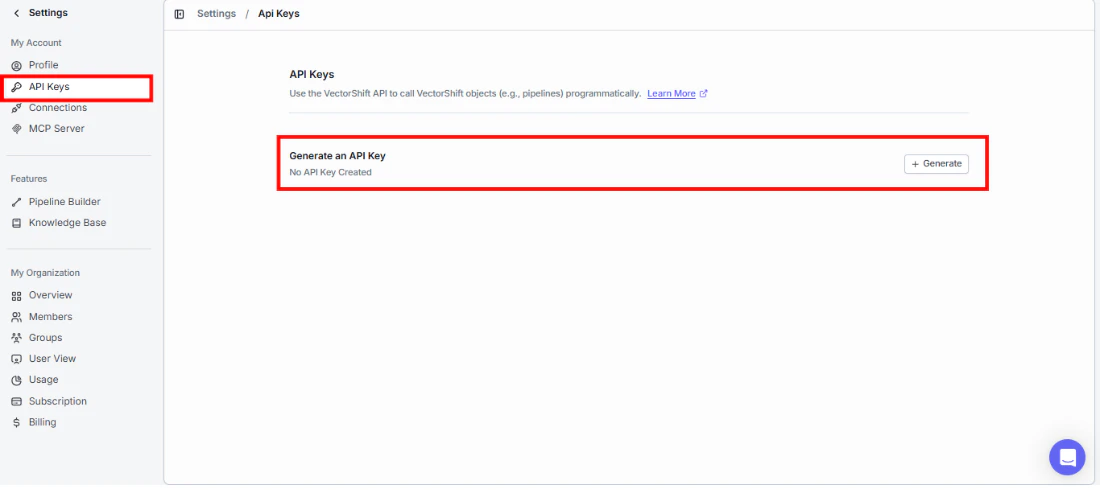
The webhook URL contains a placeholder:{VectorShift_API_Key_Here}. Replace it with your actual VectorShift API key and click Save. You can find your API key under Settings > API Keys in VectorShift.
Step 5. Test in the sandbox
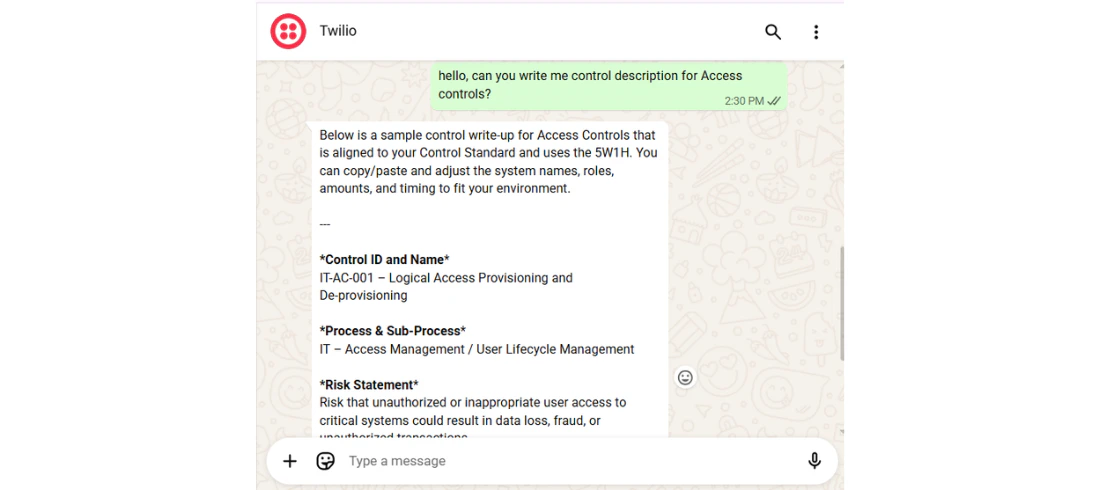
Follow Twilio’s sandbox instructions to connect your phone to the sandbox. You will typically send a specific message to a WhatsApp number that Twilio provides. Once connected, send a message and verify that your chatbot responds.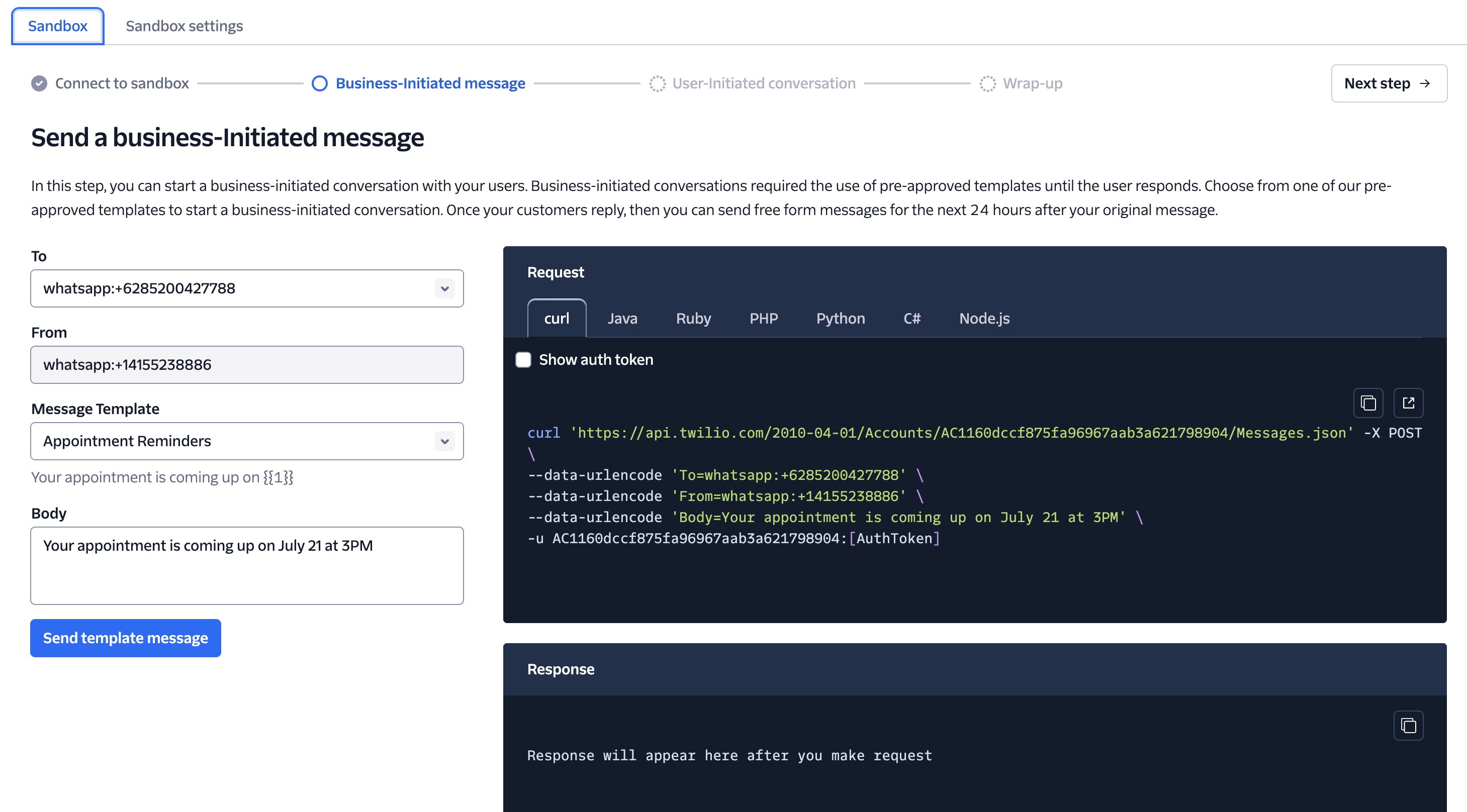
Step 6. Move to production
The sandbox is for testing only. To use your chatbot with a real WhatsApp number, you need to apply for a WhatsApp Business Profile through Twilio. Fill out Twilio’s WhatsApp Request Form to begin the approval process. Once approved, update the webhook URL in your production Twilio configuration (the same URL you used in the sandbox, with your real API key appended).Next steps
API access
Run the chatbot programmatically from your own application
Analytics
Track usage and review conversations across all channels